
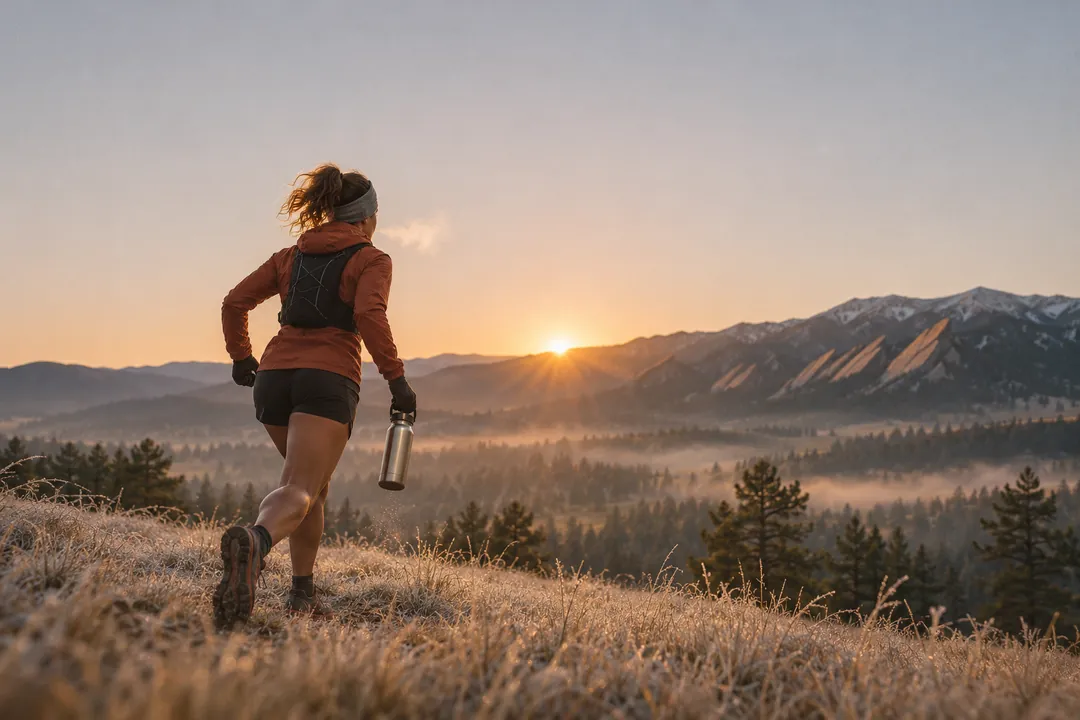
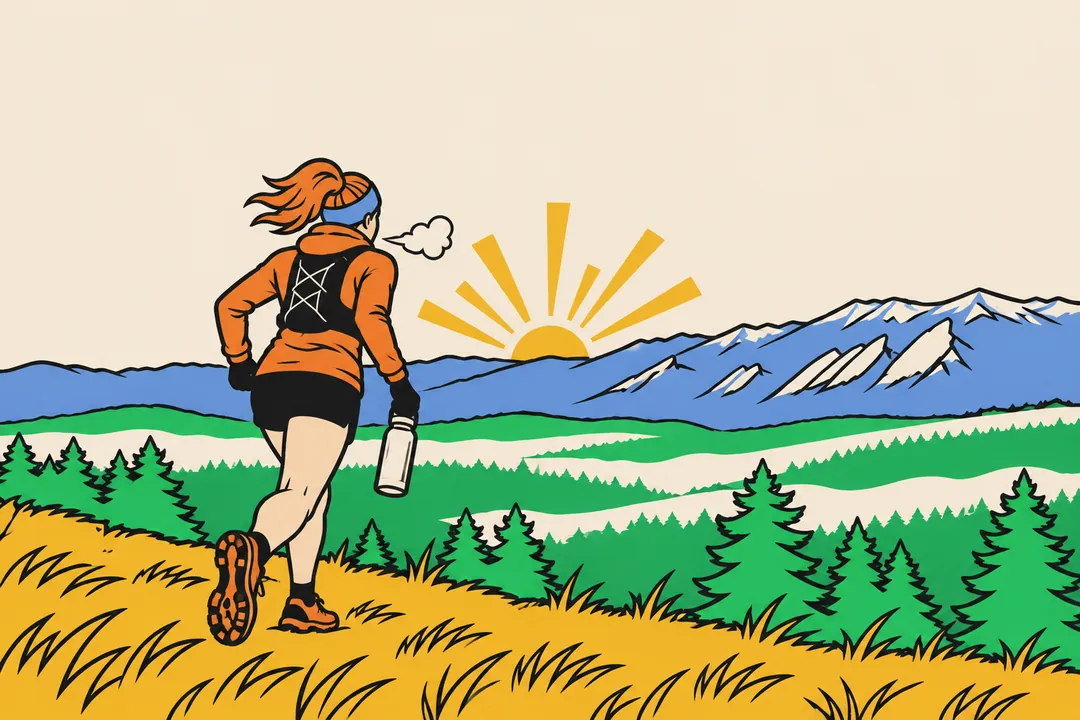
Shoot it, draw it, build it, blend it.
Ad production in Colorado Springs, with the right medium for every shot.
Which shot is which medium, and why
Every plan starts with a blend map. Here, a fictional 30-second spot for the invented Orlenna Ridge Bottle.
Shot 1, 0:00 to 0:04
Ridge at dawn
- Live action
- AI-assisted
A runner crests a frosted ridge as the sun clears the horizon.
Why this medium: Only a real location sells cold air and early light. An AI-assisted cleanup removes a power line from the sky; a compositor reviews every frame.
Shot 2, 0:04 to 0:07
First sip
- Live action
- Animation
At the trailhead the runner pours coffee; a drawn line rises out of the steam.
Why this medium: The animated line is the idea of the spot (heat that lasts), so it starts inside a real moment.
Shot 3, 0:07 to 0:12
The line becomes a chart
- Animation
The line stretches across the frame into a simple temperature curve from 6 a.m. to noon.
Why this medium: A chart is clearer drawn than filmed, and it can be retimed for every cutdown.
Shot 4, 0:12 to 0:17
Inside the wall
- 3D
The bottle separates into its layers: outer steel, vacuum gap, copper lining, inner steel.
Why this medium: A camera cannot show a vacuum gap. A 3D model built from the product drawings can, accurately.
Shot 5, 0:17 to 0:20
Back on the trail
- Live action
- 3D
- Animation
- AI-assisted
The 3D bottle sits in the runner’s real hand; the drawn line wraps around it.
Why this medium: The blended shot joins the three media. AI-assisted rotoscoping speeds the hand matte; a person finishes the edges.
Shot 6, 0:20 to 0:24
Summit pour
- Live action
At the top, the runner pours and the steam is still there.
Why this medium: The proof moment stays real: the same coffee, the same bottle, filmed hours later.
Shot 7, 0:24 to 0:27
Twelve hours
- Animation
Kinetic type: twelve hours hot, twenty-four cold.
Why this medium: Type animates cleanly in every aspect ratio and language version.
Shot 8, 0:27 to 0:30
Packshot
- 3D
The bottle turns once and settles on the end card.
Why this medium: A rendered packshot is identical in every version and can be re-rendered for a new color.
Eight shots, four media, one idea
The same spot as a storyboard strip.
Shot 10:00 to 0:04
Ridge at dawn
Live action + AI-assisted
Shot 20:04 to 0:07
First sip
Live action + Animation
Shot 30:07 to 0:12
The line becomes a chart
Animation
Shot 40:12 to 0:17
Inside the wall
3D
Shot 50:17 to 0:20
Back on the trail
Live action + 3D + Animation + AI-assisted
Shot 60:20 to 0:24
Summit pour
Live action
Shot 70:24 to 0:27
Twelve hours
Animation
Shot 80:27 to 0:30
Packshot
3D
You send a brief. You get a plan first.
The plan arrives before anything is booked.
You send
- Product and audience
- Where it runs: social, video, TV, CTV
- Lengths, formats, languages
- Deadline and budget range
- Brand guide, footage, CAD files
You get back
- A production plan with the blend map
- A deliverable matrix (24 files in the example)
- A line-item estimate and its assumptions
- Masters, versions and captions
- A rights sheet and an AI provenance log
Four media under one plan
Most briefs use more than one. The plan says which, shot by shot, and the same team cuts them together.
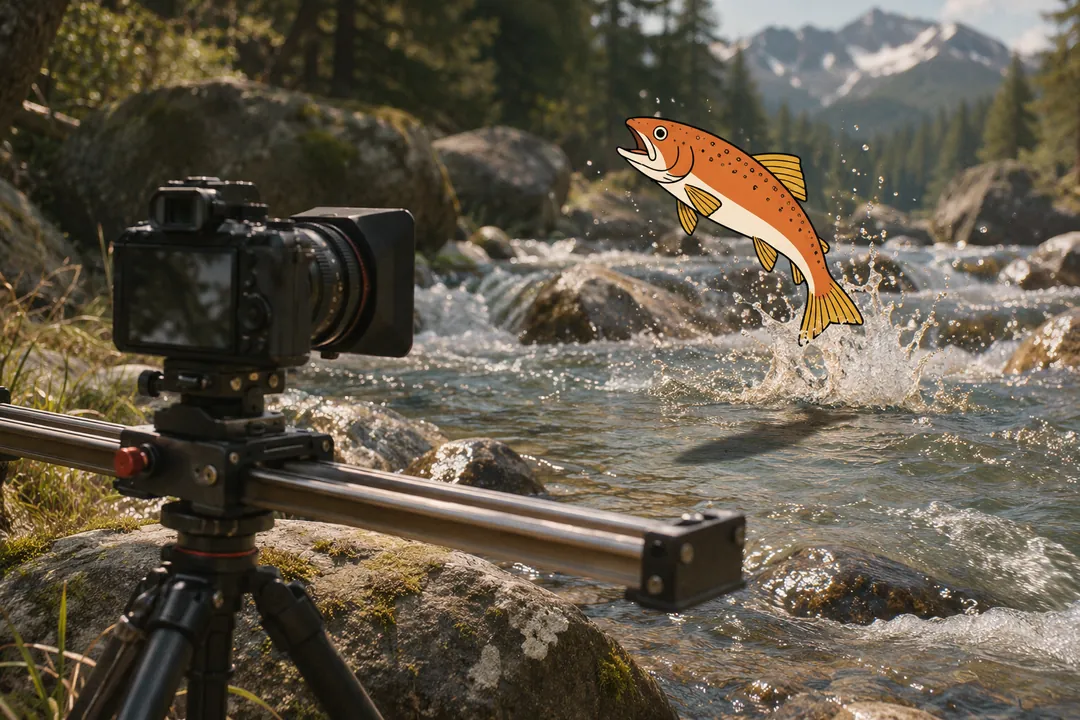
Live action
Real light, real places and real hands, shot as plates when other media join them.
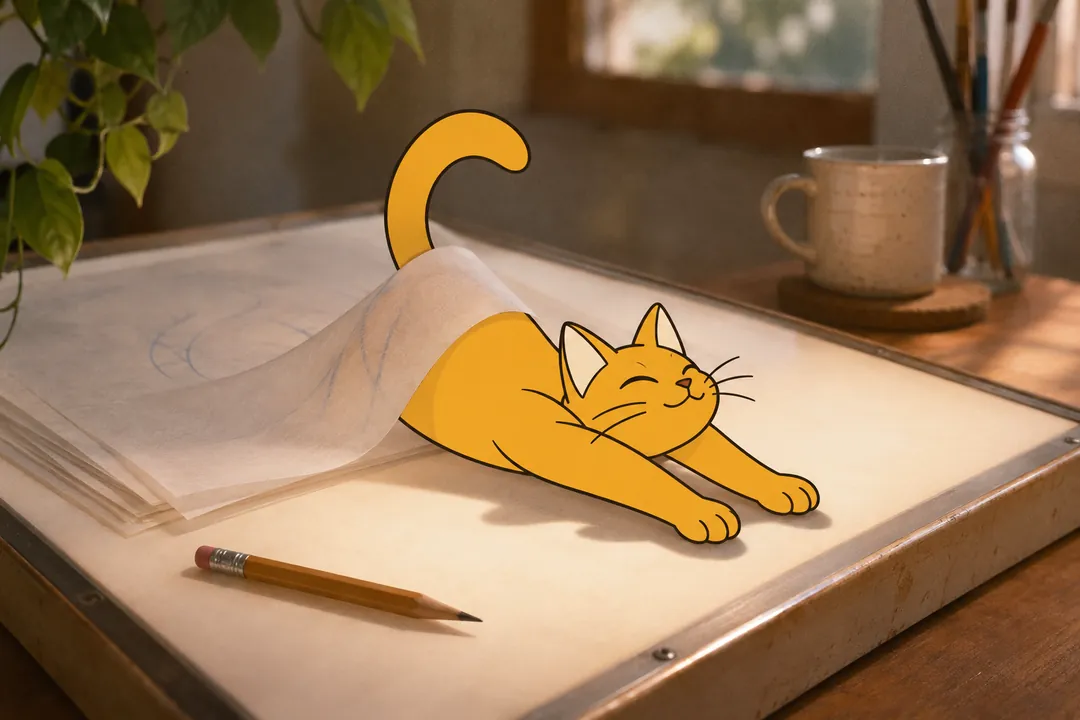
Animation
Explainers, kinetic type, characters and data, where drawing says it more clearly.
3D and CGI
Products built from their drawings, opened up, turned and lit for every format.
AI-assisted steps
Previs, cleanup and rotoscoping, each reviewed by a person and logged.
Eight weeks, from brief to 24 files
The fictional example's schedule. A real plan sets its own weeks, review points and approvers, and you see them before anything is booked.
| Weeks | Stage | Weeks chart |
|---|---|---|
| 1 | Production plan | |
| 2 to 3 | Development | |
| 4 | Shoot and build | |
| 4 to 6 | Animate and render | |
| 6 to 7 | Edit and finish | |
| 8 | Versions and delivery |
AI-assisted, reviewed and on the record
- Logged. Every AI-assisted step is listed with the shot it touched.
- Reviewed. A person checks the output before it is used.
- Consented. No real face or voice is generated or altered without written consent.
- Labeled. Disclosure follows each platform's current rule.
| Shot | Step | Reviewed by | Disclosure |
|---|---|---|---|
| 1 | Power line removed from the sky | Compositor, every frame | Minor edit, no label needed |
| 5 | Rotoscoping assist for the hand matte | Compositor finished the edges | Minor edit, no label needed |
| pre | Previs frames of the ridge shot | Director | Planning only, not in the ad |
Who it is for
The Cutting Room
Long reads on mixed-media production, AI disclosure, formats, budgets and rights, each checked against its sources.

Issue:
Stock footage in ads: editorial-only clips, releases and license tiers
Issue:
Getting a TV commercial cleared: Ad-ID, claim support and network review
Issue:
Film permits around Colorado Springs, from city parks to public land
Issue:
Medical device animation: keeping mechanism of action within the label
- All articles in The Cutting Room